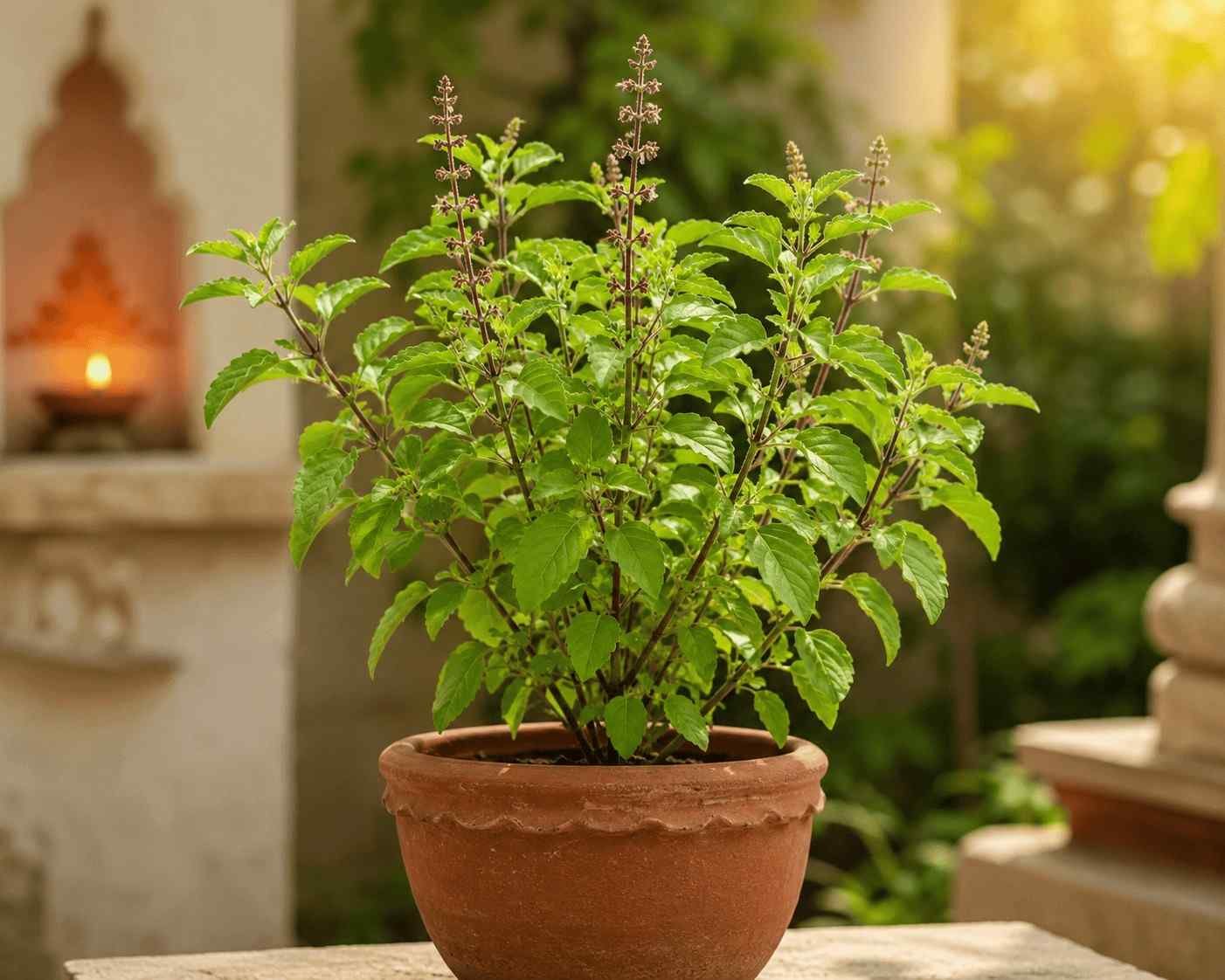
The Tulsi plant (Holy Basil) holds a special place in Indian households. Revered for centuries in Ayurveda and Hindu traditions, Tulsi is much more than an ordinary herb. It is considered a symbol of purity, health, and positivity. From medicinal properties to spiritual significance, this sacred plant continues to be an essential part of many Indian homes.
What Is the Tulsi Plant?
The tulsi paudha (Ocimum sanctum or Ocimum tenuiflorum) is an aromatic herb belonging to the mint family. Native to the Indian subcontinent, it is widely grown in homes, temples, and gardens. The plant is known for its green or purple leaves, pleasant fragrance, and numerous health benefits.
There are several varieties of Tulsi, including:
- Rama Tulsi – Known for its bright green leaves.
- Krishna Tulsi – Recognized by its dark purple leaves.
- Vana Tulsi – A wild variety with strong medicinal properties.
In many homes, people prefer a big tulsi plant as it is believed to be more auspicious and visually fuller, especially when placed in courtyards or balconies.
Why Is Tulsi Considered Sacred in Indian Homes?
In Hindu culture, the Tulsi plant is regarded as the earthly manifestation of Goddess Lakshmi and is worshipped daily in many households. It is believed to bring prosperity, happiness, and positive energy to the family. That is why people prefer ordering a tulsi plant online with same-day delivery to ensure they receive a healthy and well-grown plant for worship.
Traditionally, a Tulsi plant is placed in the courtyard or balcony, and devotees offer water and light lamps around it during prayers. Festivals like Tulsi Vivah celebrate the spiritual importance of this plant and mark the beginning of the wedding season in India.
Apart from religious beliefs, Tulsi’s air-purifying qualities and medicinal value have contributed to its revered status over generations.
Health Benefits of the Tulsi Plant
1. Boosts Immunity
Tulsi leaves contain powerful antioxidants and antibacterial compounds that help strengthen the immune system. Drinking Tulsi tea regularly may help the body fight infections and seasonal illnesses.
2. Helps Reduce Stress
Tulsi is known as an adaptogenic herb, which means it helps the body manage stress naturally. Consuming Tulsi leaves or tea may promote relaxation and improve mental well-being.
3. Supports Respiratory Health
Tulsi has been traditionally used to relieve cough, cold, asthma, and congestion. Its anti-inflammatory properties make it a popular remedy during changing weather conditions.
4. Improves Digestion
Tulsi can help stimulate digestion and reduce acidity and bloating. It is often included in Ayurvedic remedies for maintaining gut health.
5. Promotes Healthy Skin
The antibacterial and antifungal properties of Tulsi may help combat acne and skin infections. Many herbal skincare products contain Tulsi extracts due to their cleansing benefits.
Environmental Benefits of Tulsi
Besides its medicinal importance, the Tulsi plant contributes positively to the environment.
- Helps purify indoor air.
- Releases oxygen and improves air quality.
- Repels mosquitoes and certain insects naturally.
- Adds greenery and freshness to balconies and home gardens.
Because of these qualities, Tulsi is often considered one of the best plants for creating a healthy home environment.
Essential Tulsi Plant Care Tips
If you keep a tulsi plant with pot, follow the care instructions below:
Ensure Good Air Circulation
Proper airflow around the plant helps prevent fungal diseases and keeps the leaves healthy.
Protect from Extreme Weather
Tulsi grows best in warm temperatures. During harsh winters or heavy rains, move potted plants to a sheltered area.
Add Organic Fertilizer
Using compost or vermicompost once every month provides essential nutrients and promotes healthy growth.
Watch for Pests
Aphids and whiteflies may occasionally affect Tulsi plants. Neem oil spray is an effective natural solution to control pests.
Common Uses of Tulsi Leaves
Tulsi leaves are widely used in Indian households for various purposes:
- Preparing herbal tea.
- Making kadha for cough and cold relief.
- Enhancing Ayurvedic remedies.
- Adding flavor to beverages.
- Performing religious rituals and prayers.
Fresh Tulsi leaves are often consumed daily as part of a healthy lifestyle.
Vastu Importance of Tulsi Plant
According to Vastu Shastra, keeping a Tulsi plant at home is believed to attract positive energy and prosperity. The northeast direction is considered ideal for placing the plant. Many families also light a diya near Tulsi during the evening as part of daily worship practices.
Why Every Indian Home Should Have a Tulsi Plant
The Tulsi plant beautifully combines spirituality, wellness, and environmental benefits. It purifies the surroundings, supports overall health, and holds deep cultural significance. Easy to grow and maintain, Tulsi continues to be one of the most cherished plants in Indian homes.
Whether you keep it for religious reasons, medicinal benefits, or simply to enhance your garden, the Tulsi plant remains a timeless symbol of purity, positivity, and well-being.
Buy Live Tulsi Plant With Pot Online
If you are planning to bring home a healthy and well-grown Tulsi plant, it is best to choose a trusted online plant store that offers quality plants with proper care guidance. You can easily buy a live Tulsi plant with a pot online from Urvann, which offers fresh, well-nurtured Tulsi varieties delivered right to your doorstep. This makes it convenient to start your home garden or spiritual corner without the hassle of searching locally, ensuring you receive a strong and healthy plant ready for long-term growth and worship.
Bring home positivity, purity, and natural wellness today by adding a Tulsi plant to your space. Order now from Urvann and start your journey toward a greener, healthier, and more spiritual home environment.
FAQs
Is Tulsi good for home?
Yes, Tulsi is considered highly beneficial for homes due to its medicinal properties, air-purifying ability, and spiritual significance. It is believed to promote positivity and good health.
How much sunlight does a Tulsi plant need?
Tulsi grows best when it receives 4–6 hours of direct sunlight every day.
Can Tulsi be grown indoors?
Yes, Tulsi can be grown indoors near a bright window where it gets sufficient sunlight and airflow.
How often should I water a Tulsi plant?
Water the plant when the topsoil becomes dry. Avoid excessive watering to prevent root rot.
Why is Tulsi considered sacred in India?
Tulsi is associated with Goddess Lakshmi in Hindu traditions and is regarded as a symbol of purity, prosperity, and devotion. Its medicinal and environmental benefits have further enhanced its sacred status over centuries.
What is special about the Tulsi plant?
Tulsi is special because it offers spiritual significance, medicinal benefits, and environmental advantages, making it an essential plant in Indian homes.
Is Tulsi a good indoor plant?
Yes, Tulsi can grow indoors if it receives sufficient sunlight and proper airflow.
Why not touch Tulsi on Sunday?
Traditionally, Tulsi is considered sacred and is not touched on Sundays as a mark of respect to spiritual beliefs.