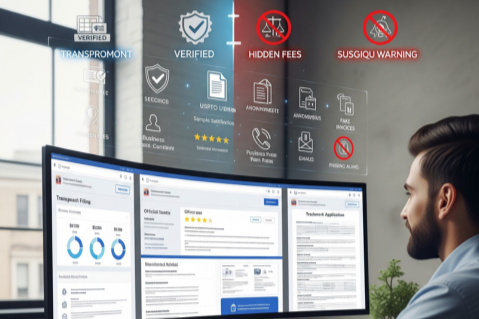
Filing a trademark involves handing over personal details, business information, and money to a company you may have only just discovered online. With trademark scams on the rise across the United States, it’s reasonable to want some reassurance before committing to any filing service, especially one you found through a search engine or social media ad.
The good news is that legitimate trademark services share a handful of common traits, and spotting them doesn’t require legal expertise.
Check Whether Pricing Is Actually Transparent
A legitimate filing service tells you the full cost upfront, including the USPTO’s base filing fee per class, before you enter any payment information. If a website is vague about pricing, buries fees in fine print, or only reveals the total cost after you’ve already started the application, treat that as a warning sign.
The USPTO’s own filing fees are public information, so any reputable service should be comparing its pricing against that baseline openly.
Look for a Real Physical Presence and Contact Information
Scam operations tend to hide behind generic contact forms with no phone number, no physical address, and no named team members. A legitimate company is usually easy to find: a real business address, a working support line, and information about who actually runs the operation.
If you search for a company name and find nothing beyond the company’s own website, that absence itself is worth noticing.
Read Reviews From More Than One Source
Checking a single review platform isn’t enough, since review scores can vary significantly depending on where you look. It’s worth checking a few different sources, such as the Better Business Bureau, Trustpilot, and Google reviews, to get a fuller picture before deciding whether a service is worth using.
For example, someone searching – is a trademark engine legitimate – will usually find a mix of customer reviews across multiple platforms rather than a single source, which is itself a reasonably good sign compared to companies with no public review history at all.
Understand What the Service Actually Does (and Doesn’t) Do
Most online trademark filing platforms are not law firms, and they shouldn’t claim to be. Legitimate services are usually upfront about providing tools, guidance, and filing support, not legal representation, unless they explicitly connect you with a licensed attorney for that purpose. Be wary of any company that guarantees trademark approval, since no service, law firm included, can promise that outcome with the USPTO.
This distinction matters because it shapes what kind of support you should expect if something goes wrong with your application later.
Watch for Scam Tactics Layered on Top of Real Services
Even legitimate companies’ customers can become targets after filing. Once a trademark application becomes part of the public USPTO record, scammers sometimes send fake renewal notices or “official-looking” letters demanding payment. This isn’t necessarily a reflection on the original filing service. It’s a separate, common scam that targets anyone with a public trademark filing, regardless of who they filed through.
Knowing this in advance helps you avoid panicking and paying a fraudulent invoice down the line.
A Quick Vetting Checklist
Before submitting any payment information, run through this short list:
- Pricing is clearly stated before checkout, with USPTO fees separated from service fees
- A real address, phone number, and support contact are listed somewhere on the site
- Reviews exist across multiple independent platforms, not just one
- The company doesn’t promise guaranteed approval
- The service clearly states whether it is or isn’t a law firm
If a company satisfies most of these points, it’s a reasonable sign you’re dealing with a legitimate filing service rather than a scam operation.
Why This Research Matters Long After Filing
Trademark scams don’t stop once you’ve filed. Letters and emails impersonating government offices or filing services continue to circulate for years after a trademark becomes part of the public record. Business owners who understand is trademark engine legitimacy questions and similar legitimacy checks early are usually better equipped to recognize suspicious correspondence later, since they already know what real communication from a trustworthy service looks like.
Building that awareness upfront saves a lot of second-guessing down the road.
Final Thoughts
Choosing a trademark filing service doesn’t have to feel like a gamble. A little research into pricing transparency, contact information, and independent reviews goes a long way toward separating legitimate services from scams, and that same diligence will serve you well long after your application is submitted.