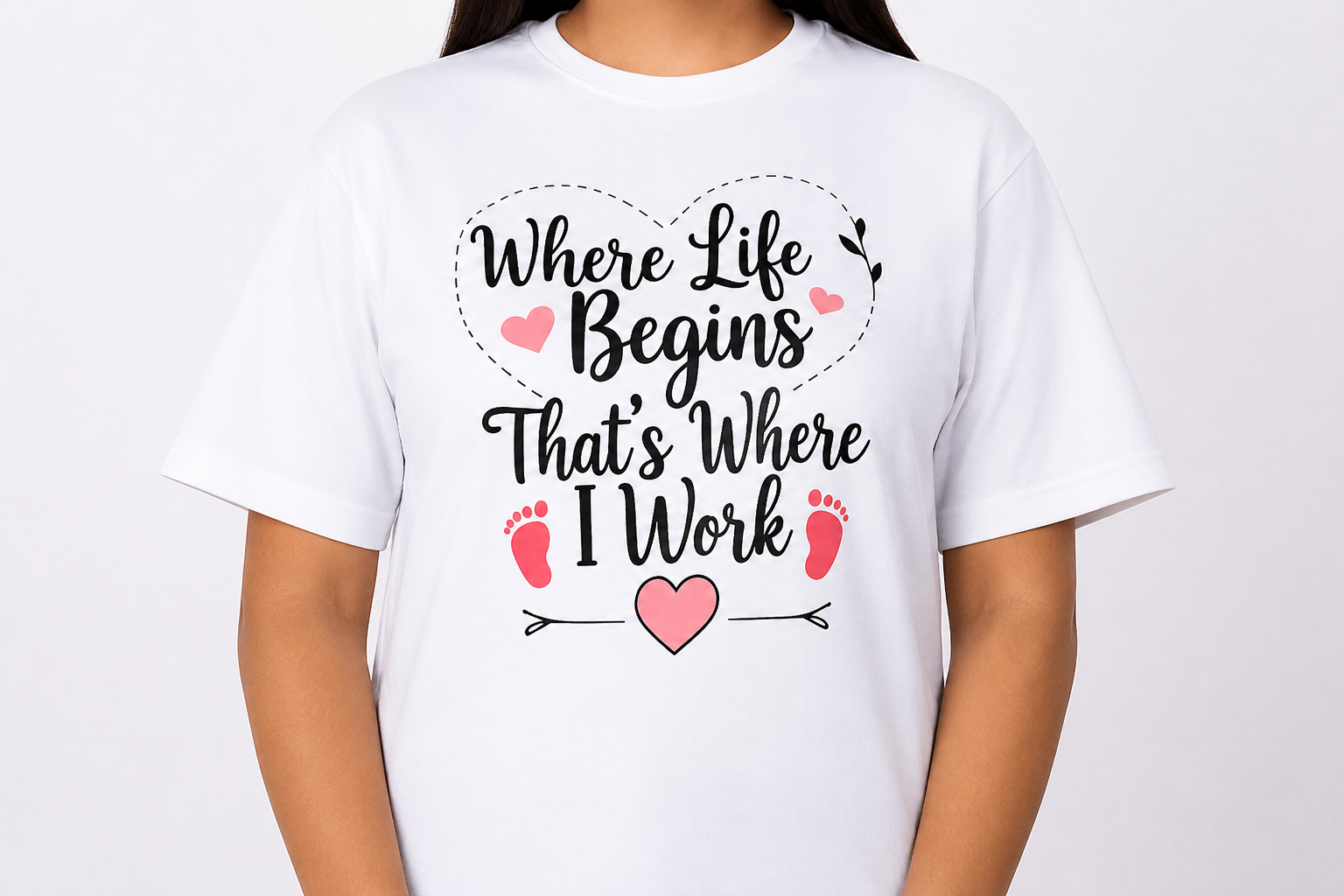
Women’s fit apparel gets treated as an afterthought in a lot of custom printing conversations, usually reduced to “same shirt, smaller sizes.” That approach explains why so many custom orders end up boxy, oddly proportioned, or printed with artwork sized for a completely different silhouette. Getting a women’s tee right takes a slightly different set of considerations than a standard unisex order, starting with the cut itself and working outward from there.
Why Fit Is the First Difference That Matters
Fit is the first and most important difference. Women’s-specific cuts are tailored through the waist, have a narrower shoulder seam, and typically sit shorter in the body than a unisex tee scaled down to the same size label. That narrower, more contoured shape changes how a print sits visually — a design proportioned for a straight, boxy unisex silhouette can look stretched or off-center once it’s placed on a tapered women’s cut, which is why designs should ideally be tested against the actual garment shape rather than assumed to transfer directly. Scoop necks, V-necks, and crew styles also change how a chest print reads, since the neckline itself shifts the visual center of the shirt.
Fabric Choices for Comfort and Drape
Fabric choice affects fit almost as much as the pattern does.
- A lightweight ring-spun cotton drapes closer to the body and tends to be the most flattering option across a range of body types.
- A heavier cotton or cotton-poly blend holds its shape more and works better for a relaxed, oversized look that’s become popular for everything from streetwear-style graphics to cozy weekend shirts.
- Stretch content, usually a small percentage of spandex blended into the cotton, adds recovery and comfort for a more fitted cut, which matters if the shirt is meant to be worn snug rather than loose.
None of these are objectively correct — they’re style decisions that should match how the shirt is actually going to be worn.
Printing Methods and Fit-Specific Considerations
Printing method considerations carry over from general apparel printing but with a few fit-specific wrinkles.
- Screen printing remains reliable and cost-effective for bulk orders of the same design across multiple sizes, though it’s worth double-checking placement on the smallest and largest sizes in a run, since a print centered perfectly on a medium can shift noticeably off-center on an extra-small or extra-large due to how the pattern scales.
- DTG printing handles detailed, colorful artwork well and tends to feel softer against the skin since the ink absorbs into the fibers rather than sitting on top, which some people prefer for fitted, closer-to-body styles.
- Embroidery works nicely for smaller design elements like a monogram or a compact logo, especially on more structured, tailored-fit tees.
Previewing Your Design on the Real Garment
If you’re starting from a blank template, this is a good point to actually build out the concept using a platform that lets you preview custom women’s t shirts against the real garment shape and color options, since it shows how a design interacts with darts, side seams, and the narrower body panel before anything gets printed. Catching a placement issue at this stage is far easier than adjusting after a full run has already gone to print.
Personalization That Makes a Shirt Worth Keeping
A growing number of shoppers are looking specifically for personalized women’s t shirts for events like bachelorette parties, birthday celebrations, team merchandise, or small business branding, and the personalization itself is often what makes the shirt feel worth ordering in the first place rather than buying something off a shelf. Names, dates, or small custom graphics added to a base design turn a generic shirt into something people actually want to wear again, which is a meaningfully different outcome than a plain logo tee that gets worn once and forgotten.
Sizing Charts and Color Selection
Sizing charts deserve real attention here, more than with unisex apparel, because women’s sizing conventions vary more between brands than men’s or unisex sizing does. A size medium in one brand’s women’s cut can differ by a couple of inches in the bust and waist compared to another brand’s medium, so relying on a specific garment’s actual measurements — rather than assuming sizing consistency across brands — prevents a batch order from arriving in fits that don’t match expectations. This matters even more for group orders like bridal parties or team shirts, where a mismatched size can mean a shirt that simply doesn’t get worn. Color selection interacts with fit in a subtle way too — darker, more saturated garment colors tend to visually slim the silhouette while lighter pastels can wash out lighter prints, so it’s worth considering the finished look in context rather than picking a garment color purely by brand palette. Testing a mockup against the actual shirt color, not just a white background, avoids a design that looks stronger on screen than it does in person.
Getting a women’s t-shirt order right comes down to respecting that it’s a different garment, not a resized version of a unisex one. Fit, fabric weight, and sizing consistency all deserve their own attention, and a little extra care at the design stage is what separates a shirt people wear on repeat from one that ends up donated after a single try-on.