Introduction
Modern digital systems create massive amounts of data every second. Phones, cars, smart home devices, security cameras, and factory machines are always collecting information. For many years, most of this data was sent to faraway cloud servers for processing. That model still works for many tasks, but it can be slow when speed really matters.
To solve this problem, a new approach has grown fast across the United States. Many people now ask what is edge computing and why it matters. Edge computing means processing data close to where it is created instead of sending everything to a distant data center. This small change makes a big difference in speed, reliability, and cost.
In this article, you will learn how edge computing works, why it is useful, and where it is used in everyday American life.
What Is Edge Computing
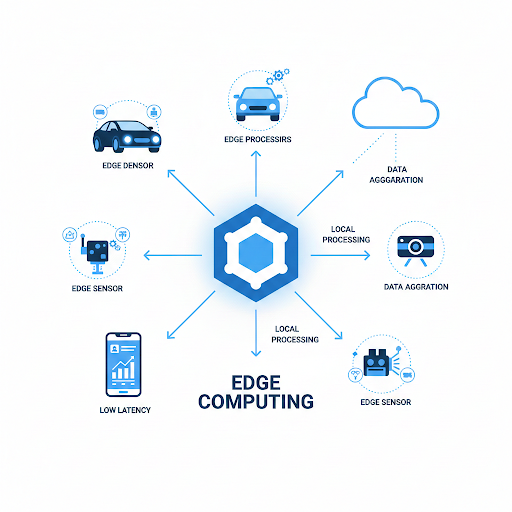
Edge computing is a computing model where data is processed near the source instead of in a central cloud location. The source can be a sensor, a camera, a phone, or a machine. The processing can happen on a local server, a gateway device, or even directly on the device itself.
Instead of sending raw data across the internet, the system handles important tasks locally and sends only useful results to the cloud. This saves time and reduces the load on networks.
In simple terms, what is edge computing comes down to this idea: move computing closer to the data so systems can react faster and work more efficiently.
Why Edge Computing Is Important
Traditional cloud computing depends on long-distance data travel. That works well for storing files or running reports, but it creates problems when fast decisions are needed.
Edge computing matters because it solves several common issues.
Latency becomes much lower because data does not need to travel far. This is critical for real time systems like traffic cameras and medical devices.
Bandwidth use goes down because only selected data is sent to the cloud. This helps businesses control network costs.
Reliability improves because systems can still operate when internet connections are weak or unstable.
Privacy improves because sensitive data can stay close to where it is created instead of moving across public networks.
These benefits make edge computing a good fit for many industries in the United States that depend on speed and safety.
How Edge Computing Works
Edge computing uses hardware and software placed near data sources. These systems are called edge nodes. They can be routers, gateways, local servers, or smart devices.
The process usually follows three steps.
First, a device collects data. This could be a camera capturing video or a sensor measuring temperature.
Second, the edge node processes the data. It might filter it, analyze it, or run a machine learning model.
Third, only important results are sent to the cloud for storage or deeper analysis.
This setup creates a hybrid system. The edge handles fast actions while the cloud handles heavy computing and long term data storage.
Edge Computing Compared To Cloud And Fog Models
Cloud computing processes data in large centralized data centers. It is good for large scale storage and complex analytics but can cause delays for time sensitive tasks.
Edge computing processes data close to where it is created. This makes it ideal for real time systems that need quick responses.
Fog computing works between edge devices and the cloud. It handles some processing near the source while still using cloud servers for broader analysis. Fog computing is useful when both speed and centralized control are needed.
These models often work together. Edge handles instant actions. Fog manages regional tasks. Cloud handles long term processing and storage.
Key Benefits Of Edge Computing
Faster Response Time
Local processing allows systems to react in milliseconds. This is important for applications like autonomous vehicles and medical monitoring.
Lower Network Costs
Sending only selected data to the cloud reduces bandwidth usage. This saves money for companies that manage large networks.
Better Security And Privacy
Keeping data closer to its source reduces exposure during transfer. This helps meet strict data protection rules used in the United States.
Higher Reliability
Edge systems can keep running even if the cloud connection goes down. This is helpful for factories and hospitals that need nonstop operation.
Real World Uses In The United States
Transportation
Connected cars and traffic systems use edge computing to process data from cameras and sensors in real time. This helps reduce accidents and improve traffic flow.
Healthcare
Hospitals use edge devices to monitor patient data. Vital signs can be processed locally so doctors receive alerts right away. This is especially useful in emergency care and remote clinics.
Manufacturing
Factories use edge computing to track machine performance. Systems can detect problems early and reduce downtime.
Retail
Stores use edge systems for inventory tracking and customer behavior analysis. This allows faster checkout and better stock control.
Smart Cities
Cities use edge computing to manage street lights, parking systems, and public safety cameras. Data is processed locally to support quick decisions.
Role Of Edge Computing In The Internet Of Things
The Internet of Things connects billions of devices. These devices generate huge amounts of data. Sending all of it to the cloud would overload networks.
Edge computing allows IoT devices to process data nearby. This makes smart homes, farms, and factories more efficient. Sensors can make quick decisions without waiting for cloud responses.
This approach is important for rural areas in the US where internet speed may be limited.
Security Considerations
Edge computing improves privacy but also creates new security challenges. Each edge device must be protected from hacking.
Key security needs include:
- Strong device authentication
- Encrypted data storage
- Regular software updates
- Monitoring for unusual activity
Because there are many devices, security must be built into the system from the start.
Challenges Of Edge Computing
Edge computing is powerful but not perfect.
Hardware costs can be high because local servers and devices must be installed and maintained.
Managing many devices can be complex. Each one needs updates and monitoring.
Data coordination between edge and cloud systems requires careful design to avoid errors or data loss.
These challenges mean organizations must plan carefully before adopting edge systems.
The Future Of Edge Computing In The US
Edge computing will continue to grow as more devices connect to networks. The rollout of 5G makes edge systems faster and more reliable.
Artificial intelligence is also moving to the edge. Models can now run directly on devices, allowing instant predictions and actions.
In the future, most digital services will use a mix of edge and cloud computing. Real time tasks will happen locally. Heavy analysis will happen in centralized systems.
As more people ask what is edge computing, it becomes clear that this model supports the next generation of digital services.
Konklusion
Edge computing changes where data is processed and how fast systems respond. By moving computing closer to data sources, it reduces delays, saves bandwidth, and improves reliability.
It supports industries like healthcare, transportation, and manufacturing across the United States. It also plays a key role in the growth of smart cities and connected devices.
Understanding what is edge computing helps explain how modern systems stay fast, secure, and efficient in a world that depends on real time data.