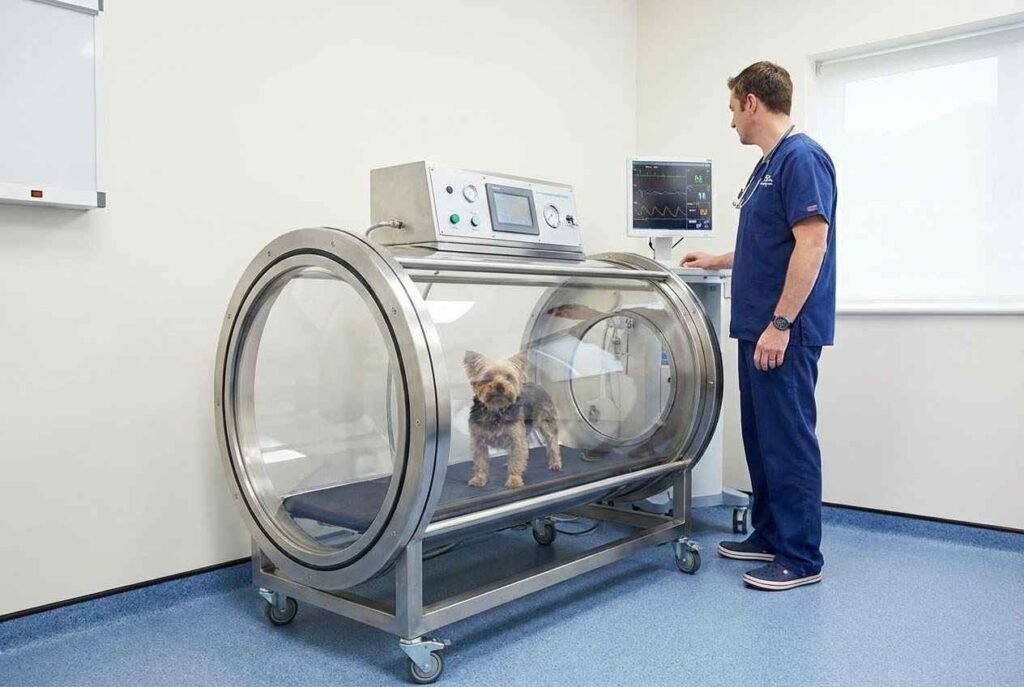
Veterinary hyperbaric oxygen therapy represents an advanced therapeutic modality increasing oxygen delivery to damaged tissues, accelerating healing and reducing inflammation. Used in human medicine for decades, hyperbaric oxygen therapy for pets now enables treatment of conditions previously considered incurable. This comprehensive guide explains the mechanism, applications, effectiveness, and what pet owners should expect when pursuing hyperbaric oxygen therapy for their animals.
How Hyperbaric Oxygen Therapy Works
Mechanism of Action
Hyperbaric oxygen therapy operates on principles of physics and biology:
- Pressure increases oxygen delivery: Treatment chambers pressurize to 2.4-3.0 atmospheres (roughly 2-3x normal atmospheric pressure)
- Oxygen dissolves in blood plasma: Elevated pressure forces oxygen molecules to dissolve directly in blood plasma, not just hemoglobin transport
- Improved tissue oxygenation: Oxygen diffuses into tissues even when microcirculation is compromised, reaching hypoxic (low-oxygen) areas unreachable by normal circulation
- Biological cascade: Increased oxygen triggers beneficial biological processes:
- Promotes neovascularization (new blood vessel formation)
- Stimulates collagen production (tissue rebuilding)
- Enhances white blood cell function (immune response)
- Reduces inflammation and swelling
- Improves wound healing
This multi-level biological response explains benefits extending beyond simple oxygen provision.
Therapeutic Applications in Veterinary Medicine
Wound Healing
Chronic wounds (non-healing ulcers, surgical site complications) respond remarkably to hyperbaric oxygen therapy. Mechanisms include:
- Improved oxygen delivery to hypoxic wound margins
- Increased collagen synthesis
- Enhanced angiogenesis (new blood vessel formation)
- Accelerated epithelialization (surface tissue formation)
Pet wounds refractory to conventional treatment often show dramatic improvement with hyperbaric therapy combined with proper wound care.
Orthopedic Injuries & Post-Surgical Recovery
Fracture healing: Oxygen accelerates bone healing through:
- Increased osteoblast (bone-forming cell) activity
- Enhanced callus formation
- Faster bridging of fracture gaps
- Improved post-operative recovery
Pets undergoing orthopedic surgery benefit from reduced complications and faster return to normal function.
Soft Tissue Injuries
Severe muscle damage, tendon injuries, and ligament tears benefit through:
- Improved healing response
- Reduced inflammation
- Enhanced tissue regeneration
- Faster pain resolution
Athletes (sporting dogs, working animals) recover faster with combined surgery/physical therapy and hyperbaric treatment.
Neurological Conditions
Spinal cord injuries remain among hyperbaric therapy’s most promising applications:
- Early treatment within 48-72 hours of injury shows best results
- Reduces swelling (secondary spinal cord damage)
- Improves neurological recovery 30-50%
- Combines with physical rehabilitation for optimal outcomes
Paralyzed pets show measurable neurological improvement with early, aggressive hyperbaric intervention.
Thermal & Chemical Burns
Severe burns benefit through:
- Reduced tissue loss (improved demarcation)
- Enhanced healing of damaged tissues
- Prevention of infection through improved immune function
- Faster epithelialization
Early hyperbaric treatment dramatically improves burn outcomes.
Diabetic Complications
Diabetic pets with foot ulcers, slow-healing wounds respond to hyperbaric therapy enhancing:
- Microcirculation in compromised tissues
- White blood cell function
- Wound healing response
- Infection prevention
Combination diabetes management and hyperbaric therapy prevents limb loss in many cases.
Radiation Injury
Radiation burns or necrosis (following cancer treatment) may respond to hyperbaric oxygen therapy addressing:
- Chronic inflammation
- Poor tissue perfusion
- Delayed healing
- Pain management
Treatment bridges conventional medicine gaps for therapy-related complications.
The Treatment Process
Pre-Treatment Evaluation
Veterinarians assess:
- Current health status
- Contraindications (some conditions prohibit treatment)
- Patient suitability (anxiety, claustrophobia considerations)
- Expected response potential
- Number of treatments required
Realistic expectations guide decision-making about treatment commitment.
Treatment Sessions
Typical treatment parameters:
- Duration: 60-120 minutes per session
- Pressure: 2.4-3.0 atmospheres
- Frequency: 5 days/week for 2-4 weeks typical
- Total treatments: 20-30 for most conditions
Sessions allow periodic pressure relief (“air breaks”) improving safety and comfort.
Sedation Considerations
Many facilities sedate anxious pets using:
- Mild sedatives (relieving anxiety without deep anesthesia)
- Short-acting agents (minimal recovery time)
- Oxygen-compatible drugs (safety priority)
Gentle sedation enables treatment tolerance while maintaining safety.
Monitoring During Treatment
Technicians monitor:
- Pressure gauges (ensure proper levels)
- Patient comfort (watch for stress signs)
- Vital signs (heart rate, oxygen levels)
- Chamber integrity (safety systems function)
Trained technicians prioritize patient safety throughout treatment.
Effectiveness & Expected Outcomes
Evidence-Based Results
Research demonstrates:
- Wound healing: 60-90% improvement rates
- Spinal cord injury: 30-50% neurological improvement
- Chronic pain: 40-70% reduction
- Post-surgical recovery: Accelerated 20-30%
- Fracture healing: 15-25% faster union
Results vary based on injury severity, treatment timing, and patient factors.
Timeline for Improvement
Early response (within 1-2 weeks):
- Reduced pain
- Decreased swelling
- Improved mobility
Intermediate response (2-4 weeks):
- Visible wound healing
- Neurological improvement (if applicable)
- Increased activity level
Long-term benefits (4-8 weeks):
- Substantial healing progress
- Return to normal function
- Reduced medication requirements
Safety & Considerations
Minimal Side Effects
Hyperbaric oxygen therapy proves remarkably safe with:
- Transient myopia (temporary vision changes): Most common, reversible
- Middle ear barotrauma: Managed through pressure equalization
- Oxygen toxicity: Prevents through pressure protocols and air breaks
- Clause phobia: Managed with sedation, acclimation
Serious complications remain exceedingly rare with proper safety protocols.
Contraindications
Conditions prohibiting treatment:
- Untreated pneumothorax (collapsed lung)
- Fever (increases seizure risk)
- Some medications (bleomycin chemotherapy)
- Severe anxiety (without sedation)
Veterinarians screen patients for contraindications before treatment.
Cost & Insurance
Treatment costs:
- Per-session: $200-500
- Complete course (20-30 sessions): $4,000-15,000
Insurance coverage: Limited but improving; some pet insurance plans cover hyperbaric therapy; discussion with insurers before treatment recommended.
Konklusion
Veterinary hyperbaric oxygen therapy represents a valuable therapeutic tool addressing conditions previously considered incurable or permanently disabling. When combined with conventional veterinary treatment, hyperbaric oxygen therapy for dogs and other pets can dramatically improve healing, reduce pain, and accelerate return to normal function. Pet owners facing challenging orthopedic, neurological, or wound-healing situations should discuss hyperbaric therapy potential with their veterinarians as a complementary treatment option.