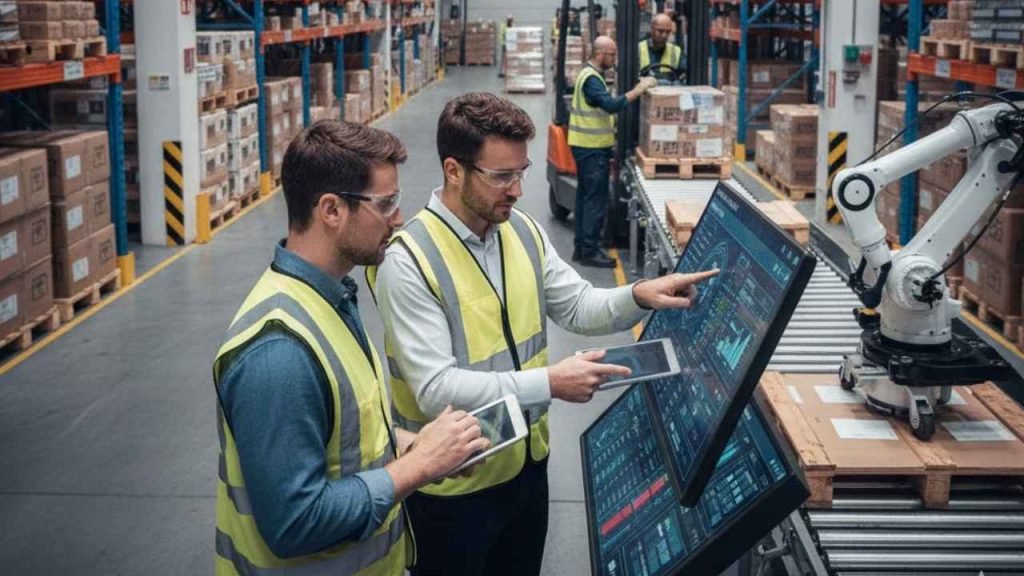
Manufacturers today face an ever-growing need to streamline their supply chains, reduce costs, and ensure product availability in a fast-paced and competitive marketplace.
While advancements in automation have helped with large-scale manufacturing operations, the last-mile procurement process often remains inefficient and error-prone. This inefficiency not only results in missed margins but also places a significant strain on operational costs and customer satisfaction.
The good news is that manufacturers are now leveraging AI-powered sales automation and supply chain automation software to revolutionize last-mile procurement, driving transformative improvements across their supply chains and improving operational efficiency, ultimately boosting margins.
Here, we will learn how manufacturers are overcoming these challenges by embracing automation, improving vendor relationships, and using data-driven insights to make smarter procurement decisions.
1. Automated Sourcing
One of the key advantages of AI-powered sales automation is its ability to automate sourcing. Revalgo’s AI-powered platform, for example, eliminates the need for sales and procurement teams to manually search for suppliers and compare prices. The system automatically identifies the best vendors based on real-time pricing and availability, allowing manufacturers to make data-driven decisions in seconds. This not only speeds up procurement cycles but also ensures that manufacturers get the most competitive pricing available.
Example: By automating the sourcing of non-stock items, manufacturers have reported up to a 60% reduction in procurement cycle times, improving product availability and customer satisfaction.
2. Real-Time Data and Analytics
Real-time data visibility is a game-changer for last-mile procurement. With AI-powered systems, manufacturers can access real-time information on stock levels, supplier performance, and order status. This allows them to make better-informed decisions and quickly adapt to changes in supply and demand. For example, if a supplier is unable to meet demand due to unforeseen delays, the AI system can automatically identify alternative suppliers to mitigate the disruption.
Example: A distributor leveraging AI-powered analytics can instantly adjust their procurement orders based on changing demand patterns, ensuring that they never run out of critical products during peak sales periods.
3. Streamlined Order Management
AI-driven sales automation also simplifies the order management process by converting complex communications (e.g., emails, phone calls, and text messages) into automated sales orders. This removes the need for reducing errors, manual data entry, and frees up time for the procurement team to focus on more strategic tasks.
Example: By automating the conversion of orders placed via email or phone, a manufacturer can ensure that customer demands are accurately captured and processed in real time without delays.
4. Enhanced Supplier Relationship Management
AI-powered solutions provide manufacturers with a centralized platform to track and evaluate supplier performance based on key metrics such as on-time delivery, product quality, and price competitiveness. This helps manufacturers build stronger, more strategic relationships with their suppliers, enabling better negotiation power and more favorable terms.
Example: Manufacturers can use AI-driven insights to track supplier performance over time, leading to better contract terms, improved delivery reliability, and greater cost savings.
5. Predictive Maintenance and Reduced Downtime
In addition to procurement automation, AI technologies enable predictive maintenance capabilities, which can be integrated into last-mile procurement workflows. By analyzing data from equipment sensors, AI systems can predict when machines need maintenance or are at risk of failure, preventing downtime and ensuring smoother operations.
Example: A manufacturer using AI-powered maintenance predictions can schedule equipment maintenance proactively, preventing production delays and ensuring a continuous supply of products for customers.
6. Improved Forecasting and Demand Planning
AI-driven platforms can also enhance demand forecasting and planning by analyzing historical data and market trends. This allows manufacturers to optimize their inventory levels and procurement strategies, ensuring they are prepared for future demand without overstocking or understocking products.
Example: By forecasting seasonal demand accurately, a manufacturer can adjust their procurement strategy to ensure they have enough inventory to meet customer needs without incurring unnecessary holding costs.
Conclusion
The transformation of last-mile procurement through AI-powered sales automation and digital solutions is reshaping how manufacturers operate. With the ability to automate sourcing, gain real-time data visibility, and optimize supplier relationships, manufacturers can streamline their procurement processes, reduce costs, and enhance their bottom line. By embracing these technologies, manufacturers can future-proof their supply chains, increase operational efficiency, and remain competitive in an increasingly fast-paced market. As AI continues to evolve, the potential for further optimizing last-mile procurement is limitless, offering manufacturers a significant advantage in the years to come.