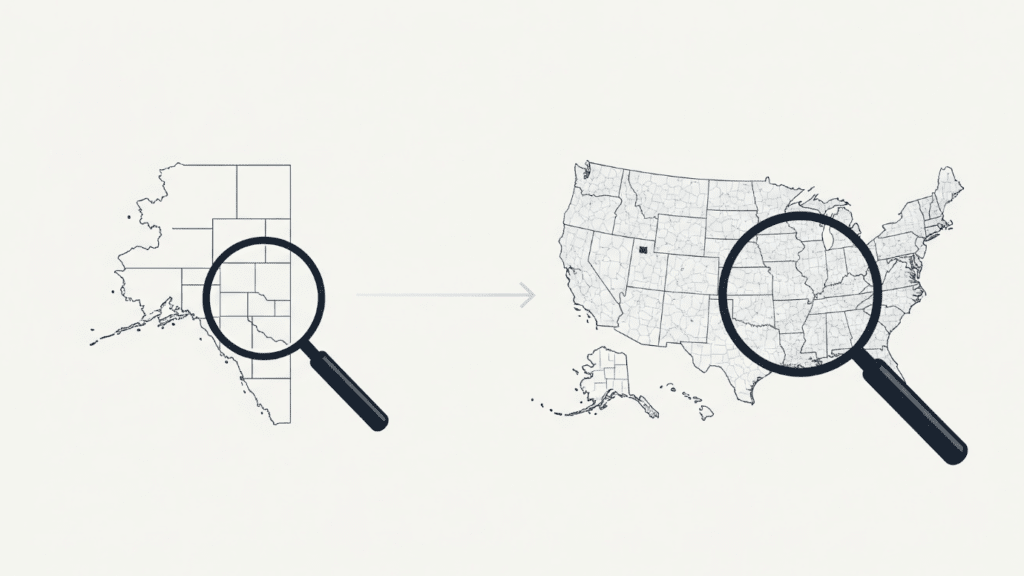
Picking a business name is just the first step, in which you need to make sure you can actually use it without legal trouble. Many entrepreneurs assume that if a name isn’t taken on Google or isn’t registered as an LLC, they’re in the clear. That’s a dangerous myth, that you must avoid to keep your business safe and avoid unnecessary cost and wastage of time. A name might be free at the state level but already claimed federally, or worse, in active use by a local shop with common law rights you can’t see in any database. To truly protect your brand from day one, you need to look beyond surface-level checks.
A comprehensive trademark search isn’t just paperwork. It’s your first line of defense against costly rebrands, cease-and-desist letters, or even lawsuits. And that means understanding the real difference between state and federal searches, not just running one and calling it done.
Federal trademark search basics
The USPTO handles federal trademark registrations. A federal search shows marks registered or pending nationwide. If someone has a live federal registration for a similar name in your industry, you likely can’t use it. You can use it even if they’re across the country. Federal rights are strong and cover all 50 states once registered.
- Key things a federal search reveals:
- Exact and similar marks already filed
- The goods or services tied to each mark
- Application status, such as live, abandoned, registered
- Filing dates that establish legal priority
State trademark search basics
Each state has its own trademark registry, usually managed by the Secretary of State’s office. These filings only protect the mark within that state. But many small businesses never file with the federal government. They only register at the state level. If you skip this step, you could unknowingly clash with a local business that has valid legal rights in your area. With state searches, you can spot:
Local businesses using your desired name
State-level registrations that don’t appear in USPTO records
Potential conflicts before you open your shop or launch locally
Why both searches matter
A federal-only search is known for leaving big gaps. There are high chances that someone might not have a federal trademark but could still sue you under “common law” rights if they’ve been using the name in commerce in your city or state. Common law rights don’t require paperwork, but are based on actual use.
Without checking both levels, you increase the risk of receiving a cease-and-desist letter after you’ve launched. This also becomes the reason behind the wastage of money on logos, packaging, and ads for a name you can’t keep. They exist simply because a business has been using a name publicly, on storefronts, websites, social media, or product labels. A basic USPTO search won’t find these. Even a state search might miss them. Look for:
- Business names on Google, Yelp, and Instagram
- Domain names and social media handles
What a comprehensive trademark search covers
A thorough search doesn’t stop at federal and state records. It digs into real-world usage. This helps you get the confidence that you need before you invest. Good trademark search services include:
- USPTO federal database review
- All 50 state trademark registries
- Corporate name filings in every state
- Domain name checks
- Social media and online business listings
- Industry-specific directories and marketplaces
When to do a full search
For a full search, it is better not to wait until you’re ready to file. Do it as soon as you have a shortlist of names. The earlier you check, the easier it is to pivot if needed. This is especially important if you plan to:
- Sell products online (which crosses state lines)
- Open multiple locations
- Apply for business loans or investors (they’ll ask about branding risks)
- Build a long-term brand you won’t outgrow
What It All Means
Picking a unique name is considered the foundation of strong branding. With a comprehensive trademark search, you get the clarity to move forward without fear. It is better to make sure your name is truly free at the federal, state, and real-world levels before you commit.