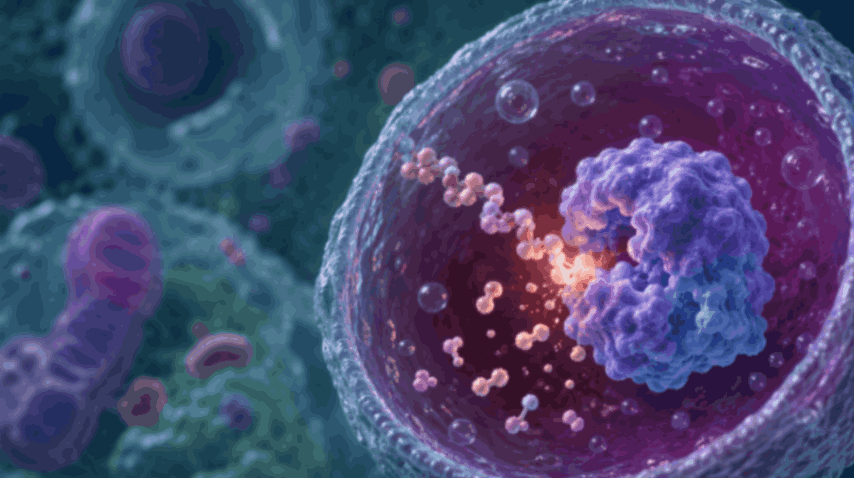
Cathepsin B (CTSB) is a lysosomal cysteine protease central to protein degradation, autophagy regulation, and apoptotic signaling. In rat models, it’s studied in the context of neurodegeneration, cancer biology, inflammatory disease, and lysosomal storage disorders. Recombinant versions of the protein are used for enzymatic characterization, substrate specificity profiling, inhibitor screening, and pathway reconstitution in cell-free systems.
Working with recombinant rat Cathepsin B in lysosomal function studies requires understanding both the biochemistry of the enzyme and the handling conditions that determine whether your in vitro results are measuring real enzymatic activity or an artifact of preparation.
The Proenzyme Problem Most Protocols Skip
Cathepsin B is synthesized as a preproenzyme and requires proteolytic processing to become active. Recombinant CTSB can be supplied as either the proform or the mature active form — and the difference has direct experimental consequences that aren’t always flagged prominently on order pages.
Proform CTSB requires activation before use. Autocatalytic activation occurs at acidic pH (around 4.0–4.5) and is temperature dependent. If you’re using proform recombinant protein in an assay at neutral pH without an activation step, you’re measuring baseline fluorescence from an inactive enzyme. Your substrate cleavage data is not informative and will not reproduce, because different activation states in different aliquots will produce different apparent activity levels.
Check the certificate of analysis to confirm whether the protein is supplied as active enzyme or requires activation. If activation is needed, incubate at pH 4.0 in sodium acetate buffer at 37°C for 30–60 minutes before shifting to your experimental conditions.
Working pH Range for In Vitro Assays
Cathepsin B is a lysosomal enzyme optimized for activity between pH 4.5 and 6.0. For in vitro activity assays, your buffer pH needs to sit in this range to see meaningful substrate cleavage rates. Running at physiological pH (7.4) suppresses activity substantially and will produce readings that underrepresent what the enzyme can do.
If your research question involves cathepsin B activity in extracellular or cytoplasmic compartments — relevant in cancer invasion models and inflammasome research — account for the pH-dependent activity reduction explicitly in your interpretation. Don’t run the assay at the wrong pH and attribute low activity to inhibition by another variable.
Substrate Selection for Activity Measurement
Standard fluorogenic substrates for cathepsin B activity measurement include:
- Z-Arg-Arg-AMC — preferred for cathepsin B, with limited activity toward cathepsins L and H
- Z-Phe-Arg-AMC — broader specificity, cleaved by multiple cysteine cathepsins
For lysosomal function studies measuring total cathepsin B contribution to protein degradation, Z-Arg-Arg-AMC combined with a cathepsin L inhibitor in the assay provides a reasonably selective readout of cathepsin B activity without requiring full lysosomal fractionation.
Measure fluorescence at excitation 380 nm / emission 460 nm for AMC substrates. Confirm the fluorescent product for your specific substrate before assuming standard AMC wavelengths apply.
Inhibitor Controls Are Not Optional
CA-074 Me is the standard membrane-permeable cathepsin B inhibitor used as a selectivity control in cell-based and biochemical assays. E-64, a broad-spectrum cysteine protease inhibitor, blocks total cysteine cathepsin activity. Running both in parallel lets you attribute measured activity specifically to cathepsin B versus co-purifying cysteine proteases.
In lysosomal fraction preparations from rat tissue, cathepsin L activity co-purifies with cathepsin B activity at levels that vary by tissue type and preparation method. Without inhibitor controls, you cannot cleanly separate these contributions in your activity data.
Storage and Activity Preservation
Recombinant cathepsin B is sensitive to:
- Repeated freeze-thaw cycles — aliquot at first thaw, don’t re-freeze working stocks
- Oxidizing conditions — maintain DTT or BME in storage buffer at all times
- Prolonged storage at 4°C after reconstitution — use within 48 hours or freeze
Confirm enzyme activity by substrate cleavage assay on receipt and again after any extended storage period. An inactive recombinant protein that looks intact on SDS-PAGE will produce uniformly negative data with no obvious indication of the source, costing you a full experiment before the problem surfaces.
Work With the Biology, Not Against It
Recombinant cathepsin B gives you clean, defined enzymatic activity — but only when the protein arrives active, stays active through proper storage, and runs in conditions that match its lysosomal pH optimum. Verify activity on receipt, aliquot immediately, pair your substrate with the right inhibitor controls, and account for pH in your interpretation. The enzyme is well-behaved once you stop fighting its biology.