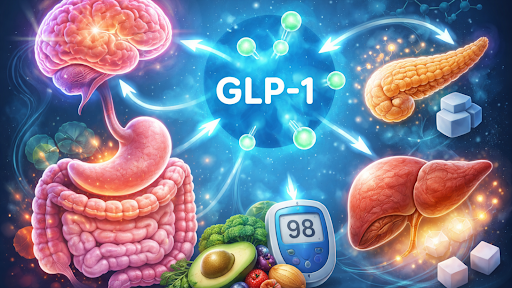
There are many low-calorie sweeteners, and almost every natural sugar substitute is marketed as the healthiest one, helping you control appetite and manage blood sugar levels. However, before you choose a sweetener, you need to understand how things work at the metabolic level. You need to know how a particular sweetener affects hormones, such as those that control appetite or regulate blood sugar levels. In this article, we focus on GLP-1, a vital metabolic hormone secreted by intestinal L-cells and brain neurons.
What Is GLP-1?
GLP-1 (Glucagon-like peptide-1) is a signaling molecule derived from the proglucagon gene. GLP-1 is released in the small intestine and colon when exposed to nutrients. A small amount of this hormone is also produced in specific regions of the brain.
It does not act as a digestive enzyme. GLP-1 functions as a message, coordinating how your body processes nutrients by communicating and sharing information between the gut, pancreas, liver, and central nervous system. This allows your body to adapt rapidly to changes in the availability of nutrients.
The Incretin Effect
This effect refers to how gut hormones, such as GLP-1, enhance insulin secretion in response to food intake. When you eat food, your gut digests nutrients and sends hormonal signals to the pancreas to prepare for the incoming glucose. GLP-1 amplifies insulin release only when nutrients are present in the gut, helping prevent sharp spikes and crashes. The incretin effect is significantly reduced in people with type 2 diabetes, indicating that GLP-1 plays a critical role in maintaining normal metabolic function.
GLP-1 and Blood Sugar Control
GLP-1 does not just signal the pancreas to secrete insulin; it also suppresses glucagon, which prompts the liver to release stored glucose, raising blood sugar. Thus, this dual action ensures that blood sugar rises in a controlled manner after a meal. This helps prevent extreme spikes.
GLP-1 promotes insulin secretion only when blood sugar is elevated, reducing the risk of hypoglycemia, which is a common side effect of some diabetes medications. It also slows down the movement of food, providing your body extra time to process nutrients and keep blood sugar levels stable for hours after a meal.
GLP-1 and Appetite Regulation
It also helps control appetite by signaling a feeling of fullness to the regions of the brain that regulate hunger and satiety. This helps limit food intake and prevents overeating.
GLP-1 also slows gastric emptying, keeping food in your stomach longer, reinforcing the brain’s satiety signals. You feel satisfied sooner and for a longer period after eating.
GLP-1’s Short Lifespan
GLP-1 has a very short lifespan of only a few minutes after release. Dipeptidyl peptidase-4 (DPP-4) is an enzyme that rapidly breaks down this hormone. Its signal is brief. Whether it is insulin secretion or appetite control, GLP-1 is released only when needed. This helps prevent excessive hormonal activity during fasting periods.
Roles Beyond Metabolism
Research shows that GLP-1 also impacts cardiovascular health and brain function. It improves cardiac output and promotes blood vessel flexibility, reducing the risk of cardiovascular complications often associated with diabetes. Areas of the brain linked to learning, memory, and mood express GLP-1 receptors, suggesting that the hormone may support cognitive function. It can potentially protect against neurodegenerative diseases. The hormone also modulates immune responses, helping reduce chronic, low-grade inflammation.
Sweeteners that Support GLP-1
When you are looking for a traditional sugar alternative that helps control appetite and blood sugar levels, also see how it influences GLP-1 secretion.
| Sweetener | Effect on GLP-1 | Mechanism |
| Allulose | Strongly stimulates GLP-1 | Mimics sugar in gut, slows gastric emptying, promotes satiety |
| Stevia (Steviol Glycosides) | Stimulates GLP-1 | Activates sweet taste receptors on gut L-cells |
| Monk Fruit (Mogrosides) | Mild stimulation | Activates gut taste receptors |
| Sugar Alcohols (Xylitol, Erythritol, Maltitol) | Modest stimulation | Partial fermentation in gut stimulates L-cells |
| Artificial Sweeteners (Sucralose, Aspartame, Acesulfame-K) | Inconsistent, minor | May activate gut taste receptors when consumed with carbs |
Jaca Rare Sugar
Not all sweeteners are created equal. You need a safe and effective traditional sugar substitute for everyday use. Jaca is an allulose-based healthy sweetener that naturally stimulates the GLP-1 (glucagon-like peptide-1) receptor to help control appetite.
It also tastes, cooks, and bakes like old-school sugar without causing blood sugar spikes.
Join the Jaca revolution by becoming an affiliate.
Follow for valuable insights on a healthy lifestyle.
Got any questions? Ask Sweetie.